
Craft breweries
Protecting equipment and operations


Craft breweries combine artistry with technical precision in compact, high-output environments. While smaller than large-scale breweries, they face similar risks—often amplified by limited redundancy and tighter margins. A proactive loss prevention strategy is essential to safeguard equipment, maintain product quality, and ensure business continuity.
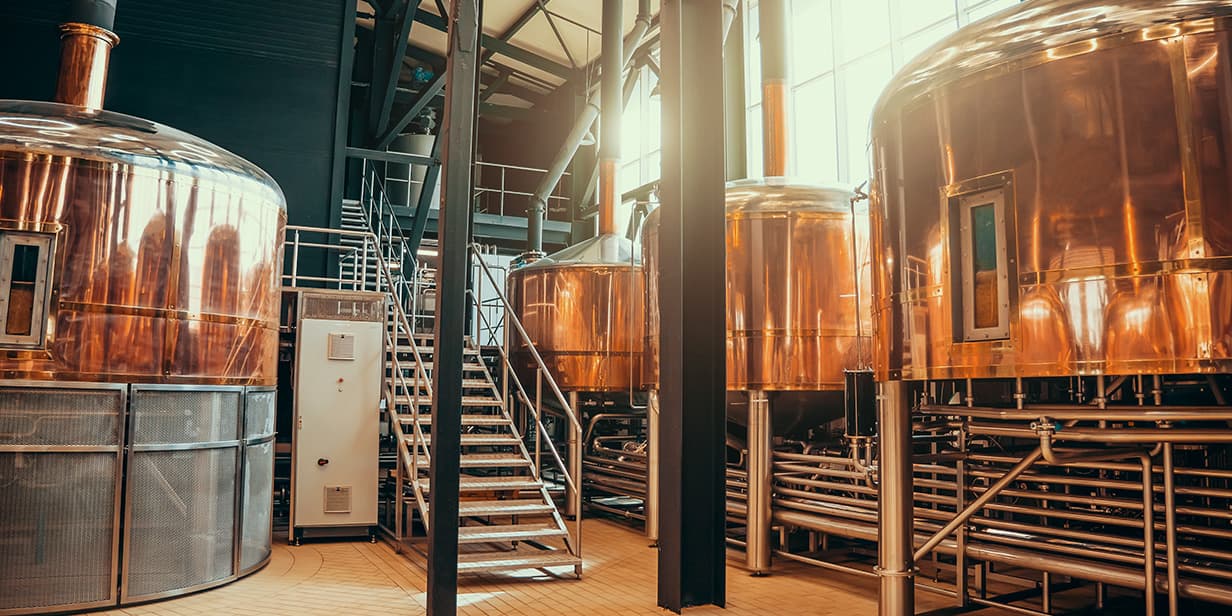
Brewery-specific equipment risks
Craft breweries rely on specialized equipment, each with its own vulnerabilities:
- Mashing tuns and lauter tuns: These vessels are essential for extracting sugars from malt. Leaks, overheating, or mechanical breakdown can halt production and cause water damage.
- Fermentation tanks: These require tight control of temperature and pressure. Breakdowns can result in spoilage, contamination, or tank rupture.
- Plate and frame heat exchangers: Used to cool wort quickly, these systems must be kept clean and efficient to avoid thermal imbalance.
- Beer filling lines: Automated bottling and canning lines are prone to mechanical jams and sanitation issues.
- Conditioning tanks: These tanks demand consistent environmental control to ensure product quality.
- Refrigeration systems: Critical for fermentation and storage, breakdown can quickly lead to spoilage and loss of entire batches.
- Grain mills: Used to crush malted grains—a crucial step before mashing. A single mill breakdown can halt production.
Unique equipment considerations
Some breweries embrace sustainability and energy efficiency. Power generating equipment, such as backup generators or solar panels, may require additional review, and should be inspected regularly to prevent fire hazards and ensure reliability during outages.
General building equipment
Despite smaller footprints, craft breweries depend on core building systems:
- Boilers: Critical for production, boilers produce steam for brewing processes and sterilization. A breakdown can stop production entirely and compromise sanitation.
- Switchgear and transformers: Electrical components must be safeguarded to prevent potential outages or fire incidents.
Key loss prevention strategies
1. Maintenance, documentation and compliance
Preventive maintenance is critical for craft breweries, where downtime can halt production entirely. Regular checks on tanks, heat exchangers, boilers, refrigeration systems, and electrical components help catch issues early. Maintain detailed logs of inspections, repairs, and upgrades.
Compliance is equally important. Adhere to local fire codes, OSHA standards, and food safety regulations. Accurate documentation supports audits, insurance claims, and risk assessments.
2. Environmental monitoring
Spoilage is one of the most significant risks for craft breweries, often caused by equipment breakdown or utility interruptions. Several factors can help mitigate these effects:
- Emergency generators: Keep compressors running during power outages.
- Spare compressors: Maintain backups for refrigeration systems.
- Contingency plans: Include refrigerated trailers or alternate refrigerated facilities.
- Remote monitoring: Use alarms for temperature deviations.
- Dedicated compressors: Some spaces may have compressors tied to specific zones, sometimes with separate electrical lines for redundancy.
Even short disruptions can ruin entire batches, leading to financial loss and reputational damage. Automated alerts and backup systems are essential to prevent catastrophic spoilage.
3. Business continuity plan
Craft breweries often operate with bottleneck equipment—such as a single mash tun, boiler, refrigeration system, or grain mill. If any of these break down, production stops. Develop contingency plans that include:
- Redundant equipment: Where feasible, maintain backup systems for critical processes.
- Emergency service agreements: Secure priority repair contracts with vendors.
- Utility outage protocols: Plan for power interruptions with generators or alternative cooling solutions.
4. Staff Training and Emergency Preparedness
Train staff on equipment handling, emergency response, and safety protocols. Conduct drills to ensure readiness for fire, chemical spills, or equipment breakdown.
Loss prevention in craft breweries is about more than protecting assets. It's about preserving the craft, ensuring product quality, and maintaining operational continuity. With proactive risk management and a culture of safety, breweries can thrive while minimizing disruptions and losses.
Additional resources:
- Risky business infographic - craft breweries – Discover how craft breweries operate and the risks that can disrupt production. This infographic highlights key industry trends, brewing basics and essential maintenance steps to reduce costly equipment breakdowns.
- Slipsheet – microbreweries – Explore common equipment breakdown risks facing microbreweries and how they can lead to spoilage or business interruption.
- FM Boiler Re Online – For a deeper look at this occupancy, download the Hazard Guide for microbreweries from the FM Boiler Re Online resource library.