
Electric vehicles and charging
Reducing risks as adoption accelerates


More drivers on the road are finding themselves behind the wheel of electric vehicles. Expansion of public charging networks, increased affordability, advancements in technology, and green initiatives are all helping drive electric vehicle popularity. Globally, the market share of electric vehicles is projected to exceed 40% by 2030, and estimates show over 26 million private charging stations and more than 1.1 million publicly accessible stations will be in place by then—highlighting the scale of this transformation. While electric vehicles are not inherently dangerous, they have gained attention due to the unique fire risks associated with lithium-ion batteries. Understanding proper charging practices is essential to reducing these risks and limiting property loss.
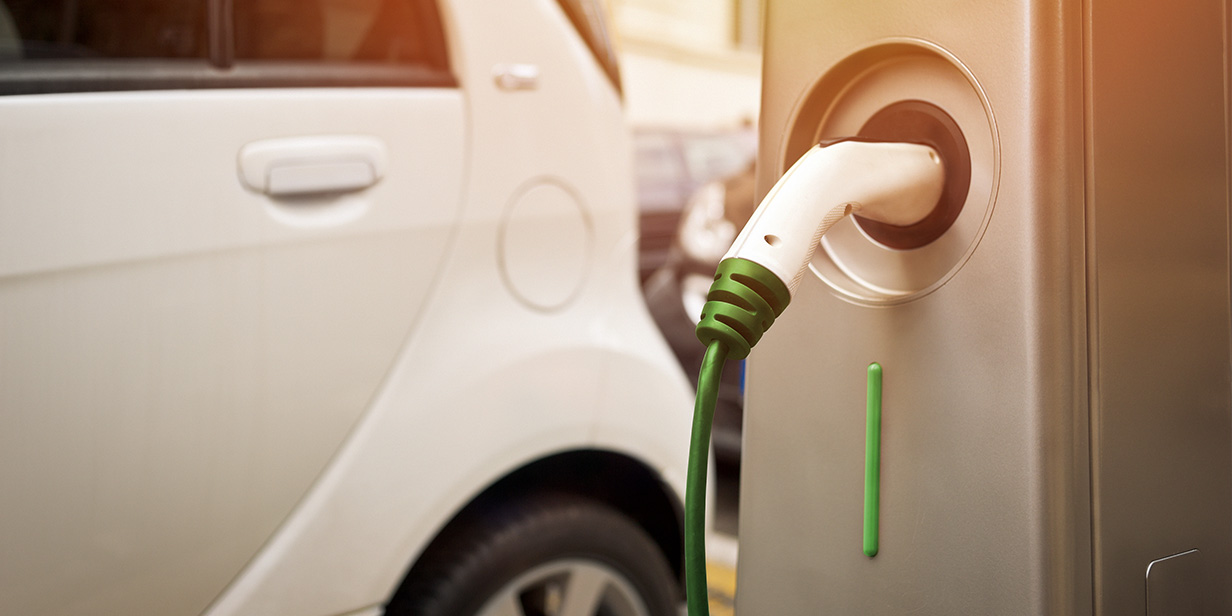
Vehicle charging types
There are three levels of vehicle chargers that operate on different power supplies and voltages. Each level has different charging capabilities including speed of charge and provided range per hour of charge.
- Level 1 chargers - These chargers are common residential type chargers. They operate utilizing 120-volt, single phase power supplies meaning they plug into a common wall outlet. As the vehicles charge, they gain 3-5 miles of range per hour of charge. This means that these types of chargers need all night (or day) to achieve a full charge of the batteries.
- Level 2 chargers - These chargers operate utilizing 208-volt or 240-volt, single phase power supplies. They require a 240-volt outlet like those provided for an electric dryer or stove. These chargers can provide 10-20 miles of range per charging hour, a significant increase from the Level 1 chargers.
- Level 3 chargers - Also known as “fast chargers” this level of charging can provide 80% of a battery's full charge in 20-30 minutes by utilizing a 480-volt, three phase power supply. These chargers are commonly only found at rest stops, gas stations and other commercial applications.
Charger loss prevention
The following are simple measures to help prevent losses associated with vehicle charging equipment, whether it is at a home or business.
Vehicle Charger Installation
- Install a new and dedicated circuit for the charger itself. Some older wiring may not be suitable for this equipment. The new circuit should be designed for the level of charger present.
- All electrical equipment should be designed and installed in accordance with the applicable electrical codes and standards and installed by a qualified electrician.
- Only use charging equipment that has been certified by nationally recognized testing laboratories.
- Electrical studies should be performed when multiple chargers are going to be installed to ensure the power systems can handle this larger draw.
- Parking garage charging locations:
- The recommended practice is for charging stations to be located outdoors.
- Charging stations should be located at least 10' feet away from buildings, structures, and important equipment.
- Charging stations should be located at least 50’ away from combustible storage, fuel tanks, utilities, and transformers.
- Where parking garages require interior charging stations due to local mandates:
- Locate the charging station on the exterior perimeter of the ground level or on the top outdoor level of the parking garage. The charging station should not be installed underground.
- Where the parking garage is connected to a building, locate the charging station as remote as possible from the main entrance.
- Locate the charging station at least 10' from critical equipment.
- Consider installing vehicle impact protection to reduce potential damage to the charging station.
Vehicle Charging
- Follow manufacturers guidelines when charging vehicles.
- Never use a multi plug adapter or extension cords when charging vehicles.
- Maintain all components of the charging equipment in accordance with the manufacturer's requirements. Never use equipment with obvious signs of damage.
Additional resources:
- FM Data Sheet 7-15, Garages – This data sheet highlights key loss prevention guidance, including updated recommendations for EV charging stations, to help reduce fire spread and structural damage.
- Lithium-ion battery resources – For additional materials on lithium-ion batteries including checklists, hazard guides, and educational videos, visit our lithium-ion battery resources center.
- FM Boiler Re Online – Visit the resource library in our portal, FM Boiler Re Online, to download copies of our lithium-ion battery loss control checklists for habitational, parking garages and repair garages.