
How do you assess wind damage risk to commercial roofs across your portfolio?


Severe weather events are creating new challenges for property portfolios, with straight-line winds increasingly contributing to roof damage and related losses.
For underwriting and loss control teams, the challenge is understanding how to evaluate roof condition, construction, and exposure consistently across different properties and geographies.
Roof systems vary widely in design, age, materials, and maintenance. Wind events can interact with these factors in ways that are not always immediately visible. Without a structured approach, it can be difficult to determine where vulnerabilities exist and how they may influence loss potential.
As these exposures evolve, many partner companies are asking a similar question: How can we assess wind and roof risk with greater clarity and consistency?
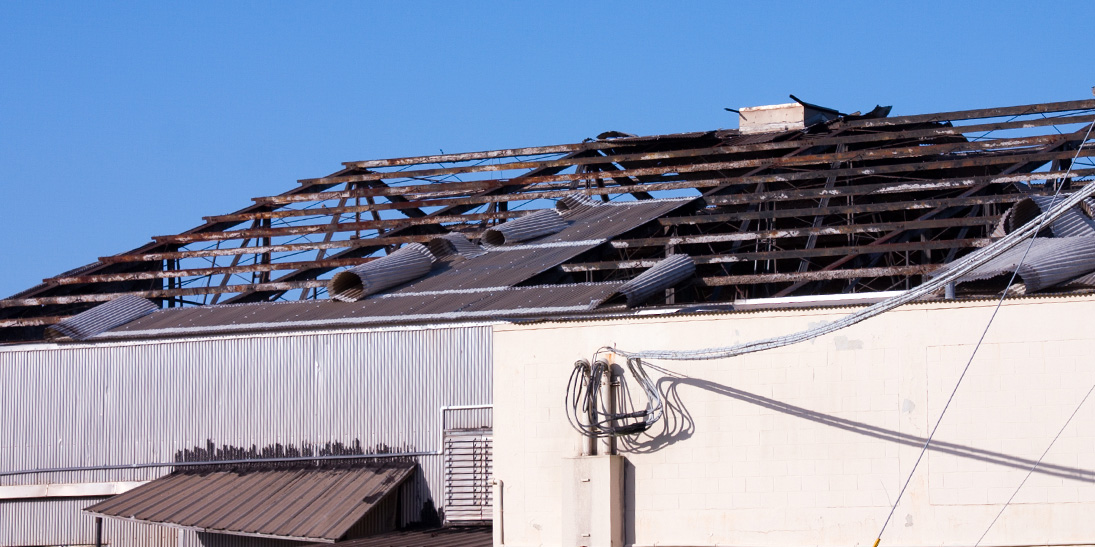
Training for evaluating wind damage and roof condition
FM Boiler Re offers customized training designed to help underwriting and loss control teams better evaluate wind-related exposures and roof performance. These sessions focus on practical application, helping teams interpret what they see and apply consistent evaluation approaches in real situations.
Training sessions can be structured around:
- Assessing straight-line wind exposures across property types
- Identifying common roof vulnerabilities and condition concerns
- Understanding how roof construction and maintenance influence performance
- Interpreting roof inspection results and grading outputs
- Applying company-specific roof evaluation tools and services
- Evaluating combined wind and roof scenarios where multiple factors interact
Wind-related roof losses often reflect a combination of factors rather than a single point of failure. By connecting these variables to underwriting decisions, training helps teams:
- Identify roof-related exposures that may otherwise be overlooked
- Understand how wind events interact with different roof systems
- Apply inspection data and grading outputs more consistently
- Align evaluation practices across underwriting and loss control teams
- Approach unfamiliar or complex risks with greater confidence
Training supports more consistent evaluation by providing a clear framework for assessing wind and roof-related risks in real-world scenarios.
Customized to reflect your portfolio and tools
Portfolios differ based on geography, construction types, underwriting strategy, and loss experience. Training is most effective when it reflects those differences.
FM Boiler Re works with each partner company to shape sessions around their specific priorities. Some engagements focus on roof condition and evaluation methods, while others combine wind exposure and roof performance into a more integrated view of risk.
“Every partner company is unique, and no two organizations view a property the same way. That’s why we begin each program by understanding your goals. From there, we tailor the training so your team can immediately apply the guidance in meaningful and actionable ways.” – Jim Wible, operations vice president, engineering manager
When partner companies use proprietary roof grading software or third-party services, training can incorporate those tools directly. This helps ensure that teams are interpreting results consistently and applying them within their existing workflows.
Ongoing support as exposure trends change
Wind patterns, building practices, and roofing systems continue to evolve, introducing new considerations for underwriting and loss control teams.
Training provides a foundation, but ongoing access to engineering insight helps reinforce that understanding over time. FM Boiler Re’s property loss prevention team is available to support partner companies as new questions arise, whether reviewing specific risks or discussing broader exposure trends.
Contact us to learn more about our training capabilities.
Additional resources:
- Property loss prevention training – Learn more about FM Boiler Re’s customized training programs.
- NatHaz toolkit: Windstorm – Access practical resources to help prepare for windstorms and reduce potential property damage.
- Contact us for a copy of FM’s wind emergency response plan.