
Roof-mounted solar PV systems: Property hazards and loss prevention controls


Roof-mounted solar photovoltaic (PV) systems are becoming increasingly common on commercial, industrial, and institutional buildings as organizations seek to reduce energy costs and meet sustainability goals. While these systems can provide reliable power generation for 25 years or more, they also introduce new property hazards that should be understood.
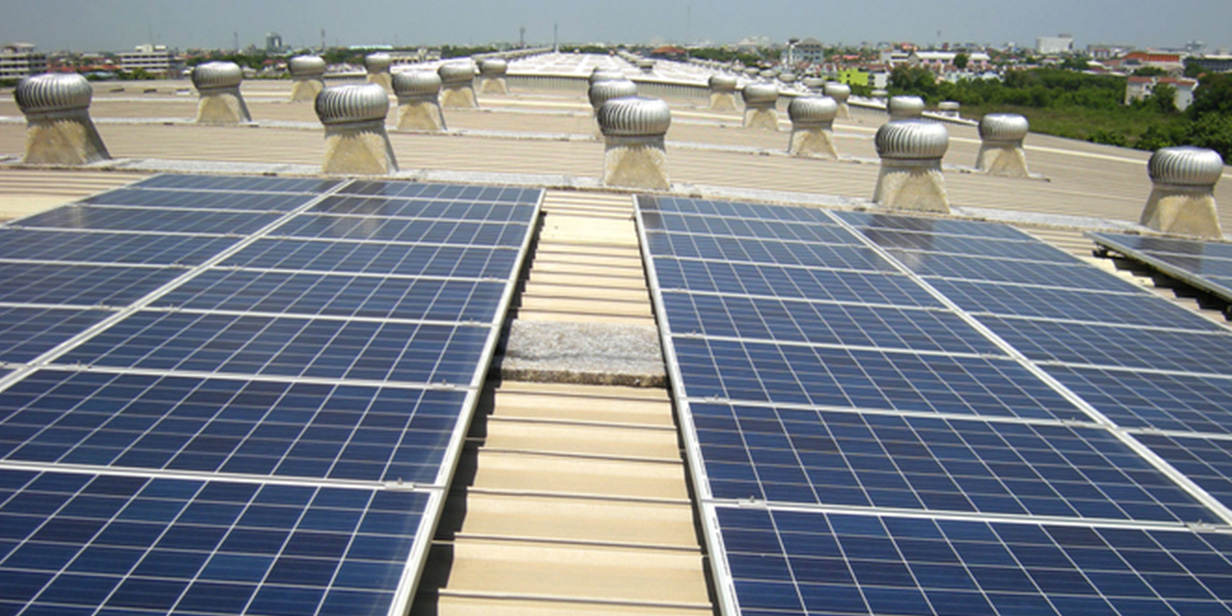
A PV system should be viewed as more than just a collection of solar panels. It is an integrated roof-PV system consisting of solar modules, mounting racks, wiring, combiner boxes, inverters, disconnects, and the roof assembly itself. Power from the PV systems can be immediately used or connected to batteries that store power for future use. Improper design, installation, or maintenance can increase the likelihood of damage from fire, wind, hail, snow, and water intrusion.
Basic components of a solar PV system
A typical roof-mounted solar installation includes:
- Solar panels (modules): Convert sunlight into direct current (DC) electricity.
- Racking and mounting systems: Secure the panels to the roof. Mounting systems may be mechanically fastened to the roof with screws or anchors, held in place with ballast such as concrete blocks, or designed as a hybrid of both methods.
- Combiner boxes: Consolidate electrical output from multiple panel strings.
- Inverters: Convert DC power into alternating current (AC) for building use or utility export.
- Electrical wiring, disconnects, and controls: Provide safe operation, monitoring, and shutdown capabilities.
The panels are generally constructed using silicon cells protected by tempered glass and encapsulated with polymer materials. These materials, while necessary for performance, can contribute to fire severity when involved in a roof-level fire.
Major property hazards
Fire
Fire is one of the most significant property concerns associated with roof-mounted solar systems. Electrical failures in wiring, combiner boxes, inverters, connectors, or other components can ignite combustible roofing materials. In addition, debris such as leaves or bird nests can accumulate beneath panels and become ignition sources.
Solar panels can also contribute to the spread of fire. During a roof fire, panels may trap and re-radiate heat back onto the roof surface, accelerating fire spread. Encapsulants and plastic components within the panels provide additional fuel, increasing damage potential. Roof assemblies containing combustible insulation or roofing materials can further contribute to fire growth and allow fire to spread into the building.
Wind
High winds from thunderstorms, hurricanes, microbursts and winter storms can create uplift forces on panels and mounting systems. When systems are not properly engineered, panels can twist within clamps, crack, detach from the roof, or become windborne debris.
Detached panels may damage other panels, puncture roof coverings, and create openings that allow water intrusion and subsequent interior damage. Insufficient attachment to the structure and insufficient ballast weight can increase damage potential. Panels around the perimeter of the array, edge of the roof, and at the corners of the roof are exposed to greater wind forces. Wind deflectors can improve aerodynamic performance and reduce uplift forces on certain panel configurations.
Hail
Hail can crack panel glass, damage internal electrical components, and allow moisture to penetrate the modules. Even if damage is not immediately apparent, performance degradation can occur over time. The risk is particularly significant in regions susceptible to large hailstones.
Roof collapse
Roof-mounted solar systems add dead load to the roof structure. The weight of the PV system and the effect the panels can have on snow accumulation can create loads that may not have been factored into the original building design. Snow accumulation around panels can create drifting conditions that produce significantly higher localized loads than expected. Combined snow, rain, ballast, and PV system weight can increase the potential for structural distress or roof collapse if not properly evaluated.
Key property loss prevention controls
Fire protection controls
The ultimate strategy to protect against fires involving PV systems is to mitigate ignition and fire spread if ignition occurs. This includes controlling fire spread across the roof surface and preventing extension into the building. Fire risk can be reduced by:
- Installing FM Approved roof-PV system.
- Install an FM Approved retrofit roof coating for PV systems. The coating can be applied on top of existing roof systems and is intended to protect the roofing system by preventing or reducing flame spread.
- Install a water spray system between the PV panel and roof covering when FM Approved roof-PV systems or coatings are not used.
- Use glass backed PV panels with noncombustible mounting systems.
- Maintain separation distances between arrays, skylights, and roof expansion joints.
- Provide proper protection of roof penetrations and expansion joints with noncombustible materials.
- Install electrical protection features including ground fault protection, arc fault protection and rapid shutdown capabilities.
- Coordinate pre-fire planning with local fire departments.
Wind protection controls
Effective wind-loss prevention measures include:
- Designing systems using site-specific wind loads
- Utilizing FM Approved roof-PV systems
- Properly anchoring combiner boxes, inverters, conduits, and related equipment
- Maintaining setbacks from roof edges and providing additional securement near access aisles and openings
Hail protection controls
To help reduce hail losses:
- Select panels with hail ratings appropriate for the site hazard level. This helps to ensure the panel glass construction is appropriate for the local hail exposure
- Utilizing FM Approved roof-PV systems.
Collapse controls
Recommended controls include:
- Verifying the roof structure can support the combined weight of the PV system, ballast, snow, and ponded water
- Evaluating snow drift conditions created by panel layouts
- Keeping drainage paths clear and unobstructed
- Reviewing existing roof condition before installation, especially on older roofs
Maintenance and inspection
Regular maintenance is essential to preserving system reliability and reducing property losses. Recommended practices include:
- Annual visual inspections of mounting systems and mechanical components.
- Tightness checks of accessible fasteners every three years or after severe weather.
- Semiannual inspections of electrical equipment for corrosion, loose connections, moisture intrusion, and damage.
- Thermographic inspections of panels, wiring, connections, combiner boxes, and inverters every three years.
- Annual inspection of roof penetrations and seals to maintain watertightness.
- Prompt correction of all identified deficiencies.
Ballasted systems
A ballasted roof-mounted solar system uses heavy concrete blocks, pavers, or other weights to hold the solar racking in place rather than attaching it directly to the roof structure. Ballasted roof-mounted solar panel systems present several property-risk concerns that should be understood. If insufficient ballast is used, high winds can shift, uplift, or overturn panels, potentially causing extensive roof and equipment damage. Conversely, excessive ballast, or a roof structure not capable for supporting additional load, can overload the roof structure, leading to deflection, deterioration, or even structural failure if the building was not designed to support the added weight. Another concern is racking movement, where panels or mounting systems slide across the roof surface due to wind, damaging the roof membrane. Examples of controls that can help protect against damage include:
- Structural engineer approval
- Completing a wind uplift analysis
- Verifying the roof load capacity
- Detailing the roof membrane protection
Roof-mounted solar PV systems offer significant energy and sustainability benefits, but they introduce fire, wind, hail, and structural exposures. Successful risk management depends on using properly tested and approved systems, designing for site-specific hazards, maintaining electrical and structural integrity, and implementing a formal inspection and maintenance program. With these controls in place, businesses can significantly improve the resilience of their solar installations while protecting both the building and the investment in renewable energy.
Additional resources:
- FM Data Sheet 1-15: Roof-mounted solar photovoltaic panels – Review engineering guidance for roof-mounted solar PV systems, including recommendations to help reduce the risk of fire, wind, hail and other natural hazard-related losses.
- Understanding the hazard: fire, wind and hail damage to roof-mounted solar photovoltaic arrays - Contact us to request a copy of this FM guide.