
Spray finishing with ignitable liquids


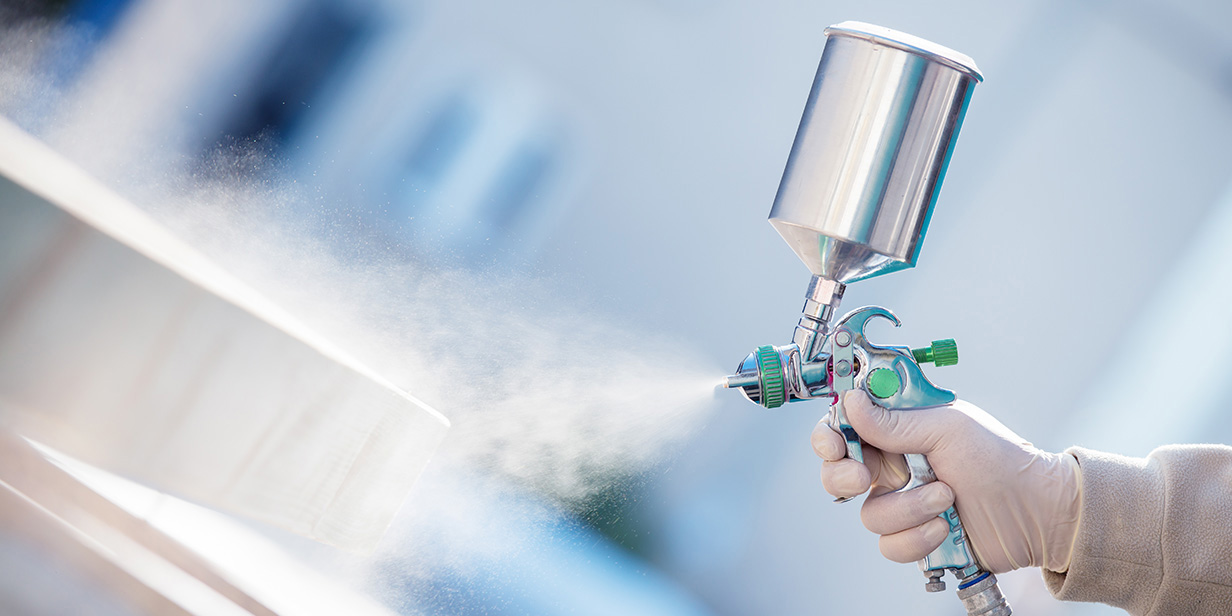
Spray finishing is the process of applying coatings by atomizing a liquid into fine droplets through a spray gun. It is widely used in industries such as metal fabrication, woodworking, automotive repair, cabinet manufacturing, and general manufacturing. While spray finishing produces a high-quality finish, atomization greatly increases the coating’s exposed surface area as it is sprayed, making it easier to ignite compared to when it is stored in bulk. Spray operations also generate flammable vapors and combustible overspray residues, creating significant fire and explosion hazards.
What fire and explosion hazards are associated with spray finishing?
Spray finishing presents three primary hazards:
1. Spray fires
Atomized coatings can ignite rapidly when exposed to an ignition source. Once ignition occurs, the spray stream may continue feeding the fire, allowing flames to spread quickly within and beyond the spray area. Stopping the flow of coating material is often critical to controlling the event.
2. Flammable vapor explosions
Spraying generates flammable vapors that can accumulate in enclosed spaces. If vapor concentrations reach hazardous levels, a spark or other ignition source can trigger a flash fire or explosion. Proper ventilation is essential to prevent dangerous vapor buildup.
3. Combustible overspray deposits
Not all coating reaches the product being finished. Overspray collects on booth surfaces, filters, plenums, exhaust ducts, and nearby areas. Over time, these deposits can become a substantial fuel source and contribute to rapid fire growth. Even water-based coatings can create combustible residues, making housekeeping an important loss prevention measure.
Types of painting operations
Manual vs. automatic spray operations
Both manual and automatic operations present similar hazards, but their risk profiles differ.
- Manual spray operations: In manual systems, the operator controls the spray gun. Most spray guns have a self-closing valve that immediately stops coating flow when released. This can limit fire growth because the fuel source is interrupted if the operator responds to an abnormal condition. Although manual operations generally have lower production rates, they still require effective fire protection and hazard controls.
- Automatic spray operations: Automatic systems use fixed spray guns, reciprocators, or robotic applicators and are common in high-volume manufacturing. They often operate with higher coating flow rates and may continue spraying after ignition occurs, increasing potential property loss. Automatic systems should incorporate interlocks that stop coating supplies, pumps, conveyors, and electrostatic equipment when fire protection systems activate. These shutdown systems should be regularly tested and maintained.
Solvent-based vs. water-based coatings
A common misconception is that water-based coatings present little fire risk. From a property protection perspective, both solvent-based and water-based coatings can create significant hazards during spray application.
- Solvent-based coatings: Traditional solvent-based products contain organic solvents that generate ignitable vapors during spraying and drying. They can also produce combustible overspray deposits that contribute to fire growth if not properly controlled.
- Water-based coatings: Water-based coatings may reduce volatile organic compound (VOC) emissions, but they are not necessarily noncombustible. Water-based coatings may contain up to 20% ignitable liquids and can burn when atomized. They also generate combustible overspray deposits. As a result, facilities using water-based coatings should apply the same fundamental safeguards used for solvent-based operations.
Key loss prevention controls
Effective loss prevention focuses on controlling ignition sources, maintaining vapor concentrations below hazardous levels, stopping the flow of ignitable liquids during a fire, and limiting fire spread if ignition occurs. The following strategies can help limit property loss.
Properly constructed spray booths or spray rooms
A properly designed spray booth or spray room helps reduce fire and explosion risk through appropriate construction, ventilation, and fire protection features. Examples of these features include:
- Noncombustible construction: Spray booths and rooms should be constructed of noncombustible materials with smooth, cleanable surfaces that reduce residue accumulation.
- Effective mechanical ventilation: Ventilation systems should remove vapors and overspray, maintain safe vapor concentrations, and prevent spraying when airflow is inadequate. Ventilation is one of the most important safeguards against fires and explosions. Where motors are located in spray areas or exhaust ducts, they should be rated for flammable-vapor environments. Beware of standard warehouse fans, box fans, or other non-rated fans being used for ventilation.
- Rated electrical equipment: Electrical equipment located within spray areas or near spray booth openings should be rated for environments containing flammable vapors.
- Automatic fire protection: Automatic sprinkler protection remains one of the most effective methods for controlling spray booth fires. Ensure protection is extended to spray booths, spray rooms, flash-off areas, and concealed spaces where overspray may accumulate. Sprinkler heads that are subject to accumulation of overspray residue should be covered with thin clear cellulose-based bags or paper bags to protect against overspray. Replace covers so heavy deposits do not accumulate.
Emergency shutdown systems
Fire detection or sprinkler activation should automatically stop spraying operations, pumps, conveyors, electrostatic equipment, and related process equipment. Manual emergency shutdown stations should also be readily accessible.
Ignitable liquid management
Reduce fire exposure by limiting the quantity of ignitable liquids stored in or near spray areas. Separate storage and mixing areas are recommended.
Housekeeping and overspray removal
Regular cleaning and inspections are essential to prevent excessive residue buildup on booth surfaces, filters, ducts, plenums, and surrounding areas. Good housekeeping reduces available fuel for a fire and can reveal ventilation or maintenance issues before they contribute to a loss.
Ignition source control
Potential ignition sources—including open flames, hot work, static electricity, hot surfaces, and electrical equipment—should be carefully controlled. For example, hot work programs should address spray areas. Proper grounding and bonding of spray equipment, piping, ducts, booths, and workpieces can help prevent static discharge and reduce ignition potential.
Conclusion
Spray finishing operations present significant property loss exposures because they combine atomized coatings, flammable vapors, combustible overspray deposits, and potential ignition sources. Understanding the hazards and maintaining effective controls can significantly reduce both the likelihood and severity of losses. When properly designed, maintained, and tested, these safeguards, along with emergency response planning, improve operational resilience and property protection.
Additional resources:
- Understanding the hazard: spray application of ignitable and combustible materials – Contact us to request a copy of this FM guide.
- FM Data Sheets – Explore FM’s Data Sheets for additional guidance on spray finishing and ignitable liquid operations, including FM Property Loss Prevention Data Sheet 7-27: Spray Application of Ignitable and Combustible Materials.
- FM Client Training Center – Access training videos and webinars focused on ignitable liquid hazards, property loss prevention, and risk mitigation.