
Tailored training for today's risks: Lithium-ion battery exposures


Lithium-ion technology isn’t new but the scale and frequency of its use throughout insured properties has changed significantly. What once appeared primarily in consumer electronics is now showing up in warehouse storage, residential buildings, industrial equipment, vehicle fleets, and charging infrastructure. With that expansion comes a new challenge for underwriting and loss control teams: How do you evaluate these risks with clarity, consistency, and confidence?
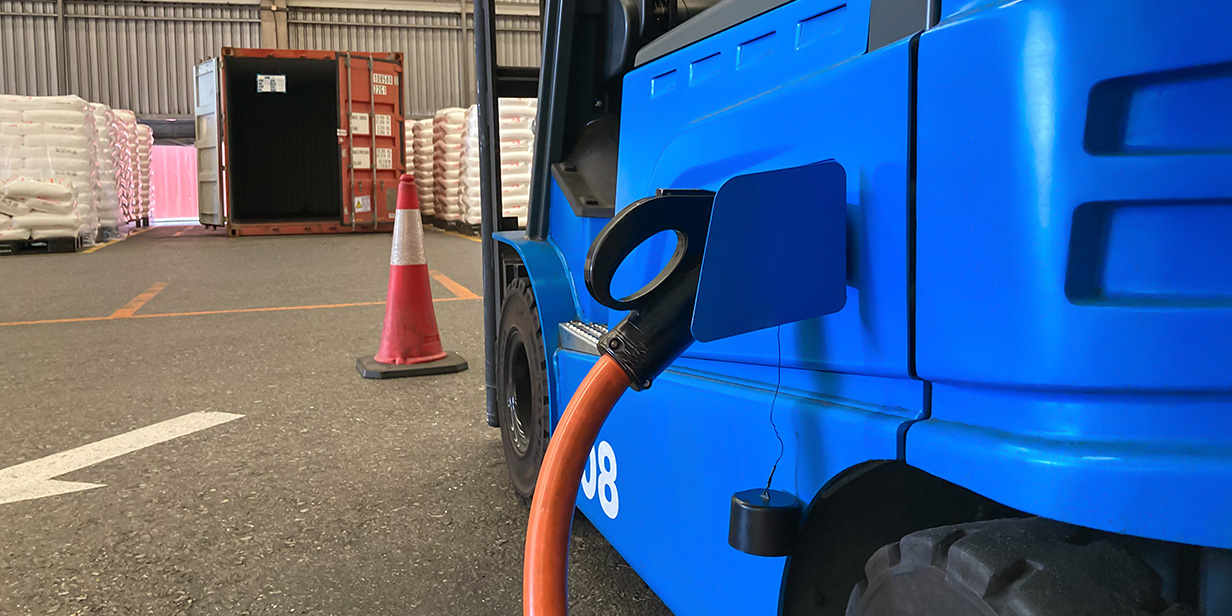
A fast changing hazard
Lithium-ion batteries present fire and explosion hazards that look different from traditional combustible exposures. The risks associated with thermal runaway, off gassing, charging practices, and energy density create evaluation challenges. The variability is part of the problem:
- Differences in battery chemistry and size
- Variations in how and where they are stored
- Mixed charging practices
- Integration into equipment or vehicles
- Conditions that may accelerate failure
Underwriting and loss control teams are encountering a range of situations, including:
- Storage of bulk batteries, or devices powered by lithium-ion batteries
- Vehicle charging stations installed in parking lots, against buildings, and even inside garages and parking structures
- Increasing instances of devices in the home or occupancy that are powered by batteries and charging these devices in the residence
- Car dealerships, auto repair shops, as well as parking garages, bus garages, parking lots and charging stations
As these exposures evolve, the questions surrounding them naturally become more challenging.
Turning questions into usable evaluation guidance
To support teams navigating this complexity, FM Boiler Re offers customized training focused specifically on lithium-ion technology. These sessions break down the fundamentals, explain key risk drivers, and provide structured approaches for reviewing the scenarios teams are seeing in real time.
Each session can be shaped around:
- Occupancies common to batteries
- Occupancy and construction considerations
- Storage and configuration
- Vehicle charging
- Battery energy storage systems
The result is training that’s practical, relevant, and aligned with the specific needs of our partner companies.
Why tailored training makes the difference
Lithium-ion exposures change quickly. Training needs to keep up. Our customized approach helps teams:
- Evaluate real world scenarios, not hypotheticals
- Apply guidance that fits into each of our partner company’s underwriting or loss control processes
- Stay aligned with current engineering insights
- Build confidence around a rapidly evolving hazard
Continuous support as exposures evolve
New questions about lithium-ion risks continue to surface as the technology expands into more applications and industries. FM Boiler Re’s property loss prevention team is available to help teams navigate unusual or evolving scenarios.
Contact us to learn more about our training capabilities.
Additional resources:
- Lithium-ion battery resources - For additional materials on lithium-ion batteries including checklists, hazard guides, and educational videos, visit our lithium-ion battery resources center.
- Hazard guide - Visit the resource library in our portal, FM Boiler Re Online, to download a copy of our lithium-ion battery hazard guide.
- Lithium-ion battery loss control checklist for storage and warehousing - This checklist highlights key controls for identifying and managing lithium-ion battery hazards in storage and warehouse environments. Login to FM Boiler Re Online for more lithium-ion battery checklists.