
Heat, rain, and risk: Australia’s 2025/26 summer climate preview for commercial property
Certain uncertainty.
As Australia enters the 2025/26 summer, the Bureau of Meteorology’s long-range forecast signals a season of heat, tropical rainfall, and regional variability.
For corporations with extensive commercial property footprints — from logistics hubs and data centres to retail networks and manufacturing sites, the climate outlook carries operational and strategic implications that demand attention.
The Castle: Infrastructure under pressure
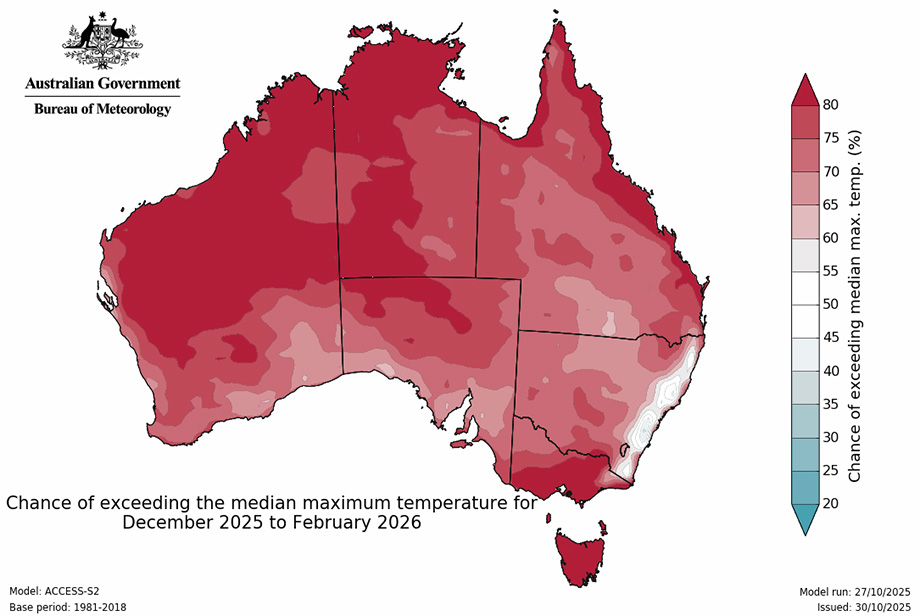
The most consistent forecast signal is above-average temperatures, both during the day and overnight. This is expected across most of Australia, with warmer nights nationwide very likely. For corporate property teams, this translates into:
- Increased cooling loads and energy consumption across facilities.
- Greater thermal stress on building envelopes, mechanical systems, and outdoor infrastructure.
- Elevated heat-related risks for equipment, materials, and operational continuity.
Organisations should review building performance, energy resilience, and preventative maintenance schedules to ensure systems are prepared for sustained heat.
Storm Boy: Tropical rainfall and regional flood risk
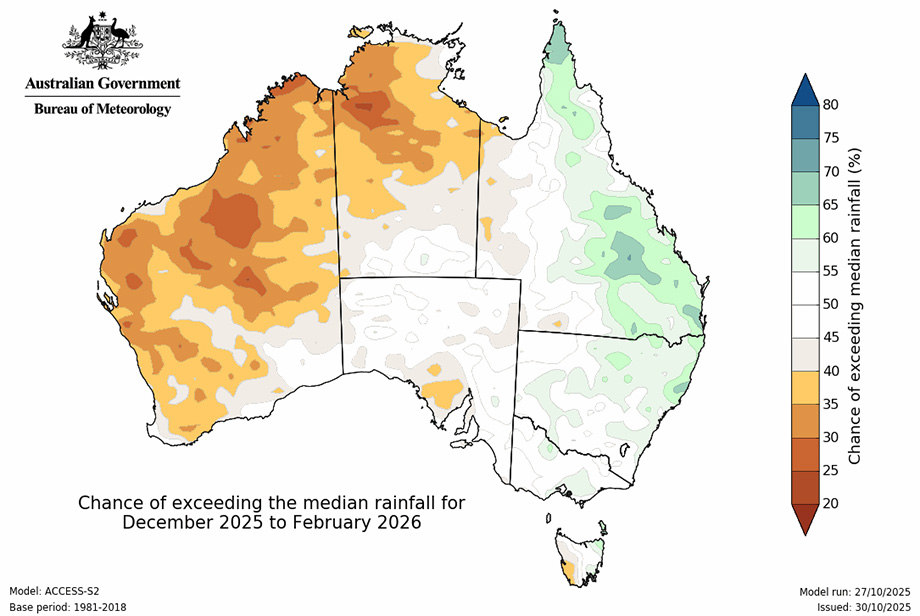
Rainfall is forecast to be above average in northern Australia, particularly far northern Queensland, where tropical systems may bring intense downpours. Elsewhere, the signal is mixed — with roughly equal chances of wetter or drier conditions across the rest of the country. For anyone following Victoria’s spring racing so far, a series of weather systems have definitely brought the wet, and soft to heavy conditions.
For corporations with assets in flood-prone or cyclone-exposed regions, this means:
- Reviewing stormwater infrastructure, flood barriers, and site drainage.
- Ensuring business continuity protocols are in place for weather-related disruptions.
- Monitoring seasonal forecasts and local alerts to support agile decision-making.
The Dry: Soil, water and regional disparities
Recent months have dried soils across Victoria, NSW, and southern Queensland, while northern and western Australia and western Tasmania retain above-average moisture. This affects:
- Ground stability and landscaping around built assets.
- Water availability for operations reliant on surface or groundwater.
- Bushfire risk in dry regions, particularly where vegetation is stressed.
Streamflow forecasts, which predict how much water will flow through rivers and streams over a certain period, suggest low flows in parts of the mainland’s southeast and northeast, which may impact water-dependent operations and environmental compliance.
“The message is clear: prepare for heat, plan for rain, and stay adaptive”
Dead Calm: Climate drivers and uncertainty
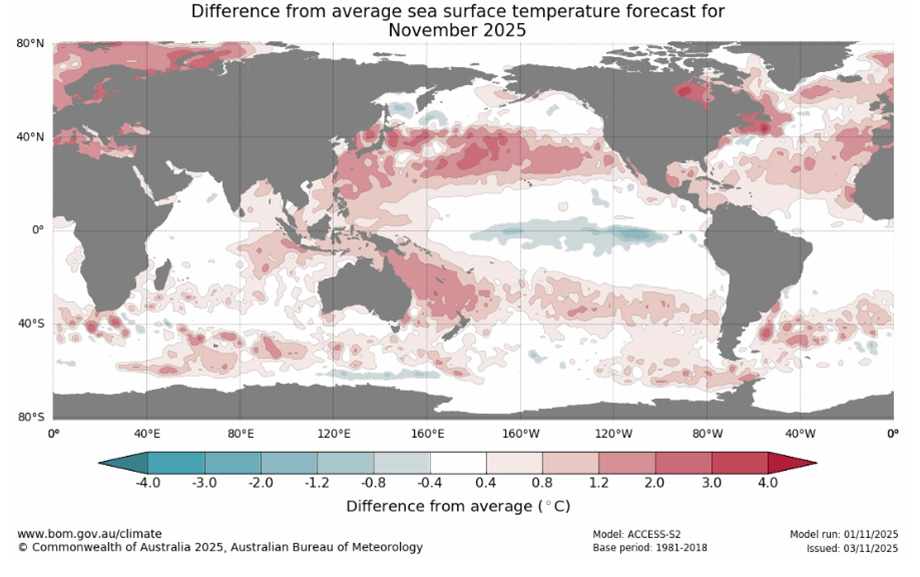
Globally, sea surface temperatures are warmer than average, including around Australia.
While the El Niño–Southern Oscillation is currently neutral, a La Niña may develop during spring. A negative Indian Ocean Dipole is already underway — typically associated with increased rainfall in Australia’s north and west.
Translation? Right now, weather patterns are neutral, but there's a chance La Niña could form in spring. That usually means wetter conditions. Meanwhile, The Indian Ocean Dipole, is already causing more rain in northern and western Australia.
These global signals introduce uncertainty into regional planning. Corporations should:
- Incorporate climate variability into operational risk models.
- Use scenario planning to anticipate both wet and dry extremes.
- Stay informed via BoM updates, FM client emails and climate intelligence platforms.
Mad Max: Risk, resilience and strategic response
For corporations with distributed property networks, the summer forecast underscores the need for resilience across systems and geographies. Key actions include:
- Auditing infrastructure for heat and flood resilience.
- Coordinating regional response plans across business units.
- Aligning environmental and operational strategies to mitigate climate impacts.
This is also a moment to assess long-term asset performance under changing climate conditions — from material durability to energy efficiency and site selection.
The Year of Living Dangerously: A season of strategic agility
Australia’s 2025/26 summer will be hot, tropical in parts, and unpredictable elsewhere. For corporations, consider this a weather update - and a call to action. The forecast demands strategic agility, cross-functional coordination - and real-time responsiveness.
Whether managing a national logistics network, a portfolio of retail sites, or critical infrastructure assets, the message is clear: Prepare for heat, plan for rains, and stay adaptive. The season ahead will test systems; but with foresight and flexibility, it can also reinforce the strength of corporate property strategy in a changing climate.