
Singapore: Noticeable resilience



In this series, we take a closer look at how key countries and territories ranked in the 2026 FM Resilience Index. The FM Resilience Index is a tool developed to help understand a country’s vulnerability to disruptive events and its ability to recover swiftly, as well as which risks are manageable. Now in its 13th year, the index provides a comprehensive risk assessment of 130 countries and territories.
What’s working well
- A podium finish that signals trust: Singapore ranks No. 3 in the 2026 FM Resilience Index, placing it among the world’s most resilient business environments.
- Momentum in the drivers that boards watch: Singapore rises to No. 3 after material gains across several factors in the last 12 months including inflation (up 35 ranks), climate risk exposure (up 12), fire risk quality (up 7) and climate change exposure (up 9).
- A city built for predictable execution: The familiar Singapore strengths still show through in the underlying story of stable governance and engineered reliability, the kind that turns complex systems into everyday routine for business.
Works in progress
- Energy intensity is the standout gap: Singapore is a surprise underperformer on energy intensity, ranking 116th globally on that driver despite its overall score and top three position.
- Physical constraints are strategic constraints: Singapore’s compact geography and limited natural resources remain a structural reality that demands constant planning discipline, from utilities to land use to contingency design.
- Climate risk is managed, never eliminated: Singapore’s progress on climate-related factors is notable, but the long-run direction of heat, rainfall intensity and sea level remains a board-level issue for anyone operating on reclaimed land or near critical coastal infrastructure.
In Singapore, resilience is easy to spot.
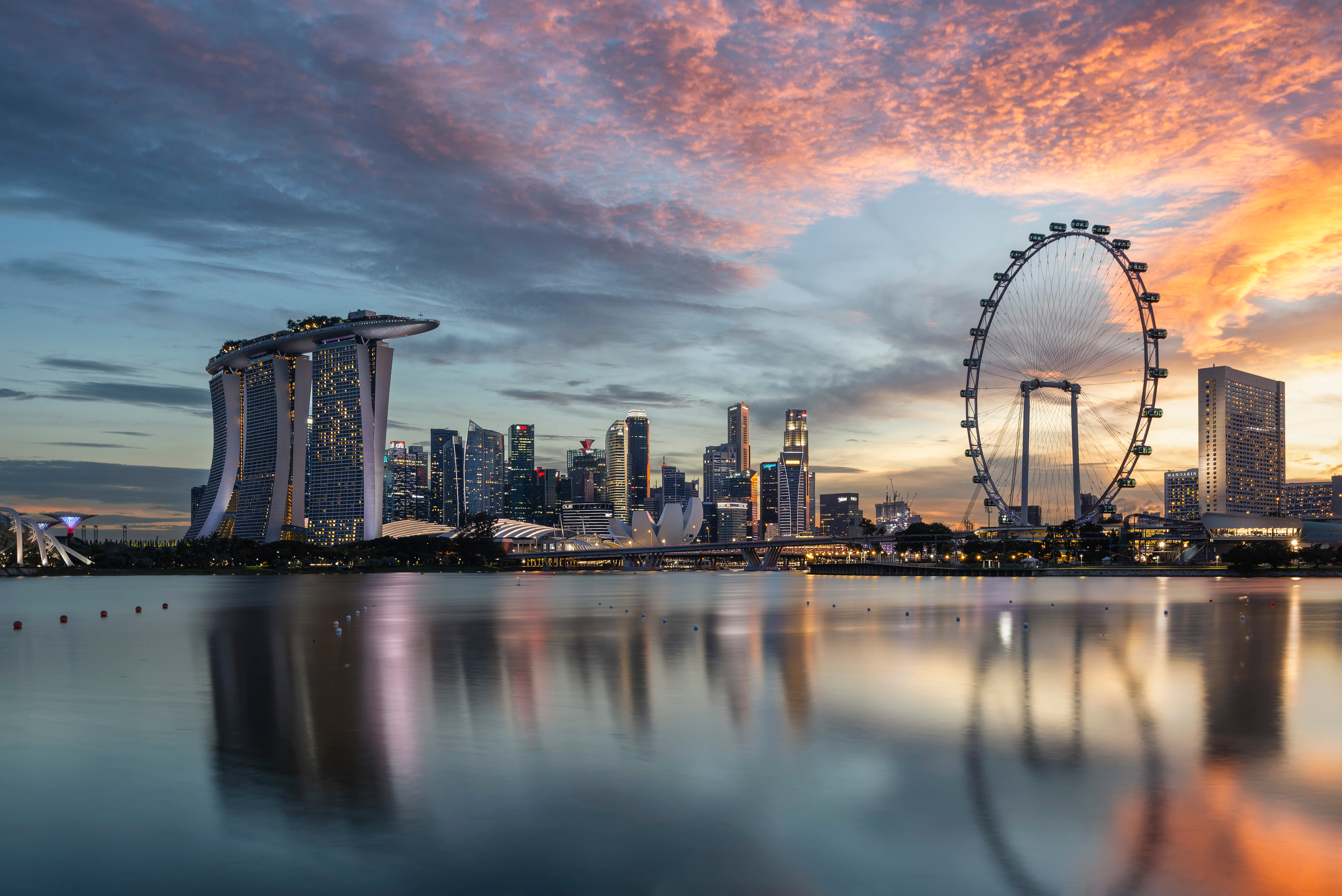
You notice it before you have even left the airport. Changi has a way of moving people through arrivals with the calm confidence of a well-run control room. A taxi or ride-share appear, quickly. The expressway signs make sense. The skyline arrives in clean layers: the CBD glass, the shophouses, the gardens, the ships waiting their turn beyond the breakwater. Even if you are new to the island, you can tell you have landed in a place that takes systems seriously.
That instinct is exactly what the 2026 FM Resilience Index attempts to measure: not charm (despite Singapore having it in spades), but the hard-to-fake conditions that help businesses recover after disruption and keep operating when the world becomes complicated. This year, the Index places Singapore third globally, in a top ten otherwise dominated by European countries.
For CEOs, CFOs and risk leaders, a No. 3 ranking is a meaningful indicator of investability. Because the FM Resilience Index tends to be stable from year to year, movement near the top of the table is significant. Singapore’s rise to third reflects substantial improvements across several drivers, including inflation, climate risk exposure, fire risk quality and climate change exposure.
Singapore’s resilience is already well established. The more interesting question for leadership teams is what its particular brand of resilience implies for capital planning, site selection, supply chain design and operational risk management, especially as the city-state leans into data centres, advanced manufacturing and regional headquarters functions.
The Singapore edge: Frictionless reliability
Singapore’s greatest advantage is how quickly it turns policy into practice. Governance takes visible form in the small things executives care about: predictable regulation, orderly infrastructure projects, a stable operating environment and a bias toward long-term planning. Fittingly, the city-state’s Economic Development Board has launched a campaign where they confidently state, “Your business needs Singapore”.
For anyone running APAC operations, Singapore’s logistics story goes well beyond a line on a chart. It is the lived experience of moving goods and people through the island’s ports, airports and roads with minimal friction. That helps explain why the city continues to serve as the region’s favoured “switchboard” for global enterprise, connecting capital, talent and supply chains across Southeast Asia and beyond.
This year’s Index commentary makes a broader point that lands particularly well in Singapore: business leaders are operating in an era of inflation hangovers, shifting climate hazards and mounting cybersecurity gaps. Singapore’s rise in the ranking reflects gains in exactly those areas that show up in board conversations.
It is worth underlining what is unusual about that combination. Many places offer low risk in one domain while remaining exposed in another. Singapore’s appeal lies in its balance: a compact place that can execute at scale, particularly when it comes to engineered protections and operational readiness.
The ‘yes, but’ that comes with being an island city-state
Singapore’s resilience is also constrained by physics. The island is small. Land is precious. Energy is imported. Water is managed carefully. When you build a global business hub on a compact footprint, efficiency is not a preference. It is a necessity.
That reality is why one number in the 2026 results stands out. Singapore ranks No. 116 for energy intensity, a result the Index calls out as a surprise for a country sitting third overall.
For a C-suite audience, the implication is direct: Singapore is an excellent place to operate, yet energy constraints cannot be treated as an operational detail. Energy intensity speaks to how much energy is required per unit of economic output. In a world where power-dense infrastructure is expanding rapidly, energy efficiency is now a site selection criterion rather than a sustainability footnote. The FM Resilience Index’s executive summary explicitly links energy intensity to data centres and power generation decisions, placing Singapore’s performance here in the “underperforming” category.
None of that is a reason to write Singapore off. It does, however, call for precision in what you build and how you build it. If Singapore is your control tower, the operational discipline extends to energy design, redundancy planning and the resilience of the wider ecosystem you depend on.
Climate: Well managed, never finished
Singapore’s climate risks are rarely the dramatic kind that arrive once a decade with a name and a headline. They are cumulative: heat, humidity, intense rainfall, coastal exposure and long-range sea level risk. We noted last year on these pressures and the city-state’s ongoing efforts to address them through planning and investment, a theme that continues to matter in 2026.
"Singapore’s appeal lies in its balance: a compact place that can execute at scale, particularly when it comes to engineered protections and operational readiness."
What stands out in the 2026 results is that Singapore improved meaningfully on climate-related drivers, rising 12 ranks in climate risk exposure and 9 ranks in climate change exposure. For risk leaders, that is encouraging because it suggests a strengthening of the environment for resilience, rather than simply the absence of recent shocks.
Climate remains an ongoing management challenge. Singapore’s strength is that it treats it as a permanent function, supported by investment, planning and engineering standards intended to hold up under pressure.
What No. 3 should mean for leadership teams
Singapore’s third-place ranking is best read as a reminder that resilience depends on both the hazards you face and what you can control. The data suggests that countries can distinguish themselves through steadiness and adaptability. Singapore’s rise suggests that it is doing exactly that.
For CEOs and CFOs, the practical takeaway is the familiar Singapore equation: high reliability, high expectations. The business environment supports complex operations, but rewards organisations that bring discipline. For risk managers, the agenda is equally clear. Treat energy intensity as a design constraint. Treat climate exposure as a planning horizon, not a seasonal concern. Use Singapore’s strengths to build resilience into the parts of your footprint that are less forgiving.
Another, final take: for readers who have never visited, imagine Singapore as a finely tuned instrument. It delivers exceptional performance because it is calibrated constantly. The city works because it assumes that systems drift unless you keep adjusting them. In 2026, the FM Resilience Index suggests that Singapore remains finely tuned and is still improving, in ways that matter to the people signing off on investment, insurance and business continuity plans.