
Four Essential qualities of a well-protected data center
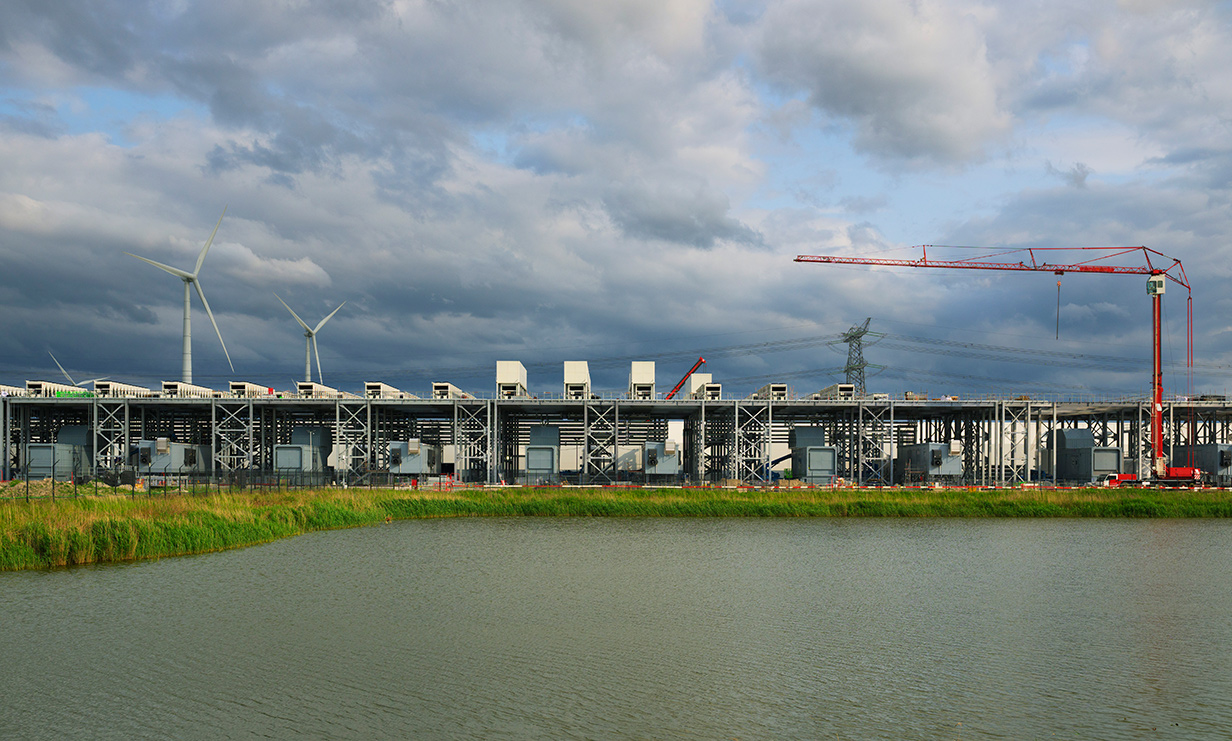
The AI boom is underway, driving unprecedented investment in data center infrastructure. Global demand for data center capacity is projected to increase by 20%, with an estimated US$7 trillion in capital expenditure expected for AI optimized data centers by 2030. The pace and scale of the industry, combined with the sensitivity of critical equipment, create challenges that can leave owners, operators, tenants, and investors vulnerable. After all, data center downtime can result in major service disruptions, financial losses, operational delays, and reputational damage.
Defining what makes a well protected data center lays the foundation for lasting resilience—protecting infrastructure, safeguarding assets, ensuring business continuity, and building confidence across the entire lifecycle.
Four key qualities to protect and future-proof your data center:
- Strategic design, site selection, and construction
Building durability from the ground up - Integrated protection
Smart monitoring, early detection, and suppression - Operational readiness
Power, cooling, and critical systems - Skilled teams and structured procedures
The foundation of resilience and business continuity
1) Strategic design, site selection, and construction
Building durability from the ground up
Data center resilience starts with site selection, design, and construction. Decisions made early in a data center’s lifecycle set the stage for long-term protection.
Here’s what to consider:
- Data center sites must be chosen and planned strategically. Consider an adequate supply of power and water, public services and transportation corridors, and other facilities in the area competing for critical resources.
- Ensure the site layout provides enough space between buildings and fuel, batteries, and power supplies to mitigate external fire risks and prevent cascading fire events across the campus.
- Choose a location with minimal exposure to natural catastrophes like hurricanes, floods, or convective storms. When these are unavoidable, facilities should be designed to be physically resistant to these and other hazards like earthquakes, wildfires, or freezing temperatures.
- Behind-the-meter (BTM) connected power generation systems must be properly sized, thoughtfully designed, expertly operated, and rigorously maintained.
- Limit fire and non-thermal damage through compartmentation and control systems supported by fire-rated construction. Especially consider reinforced concrete or a protected steel frame, and FM-approved construction materials.
- Design critical systems so that teams can maintain and replace equipment throughout the lifecycle without compromising operations. Contingency plans should be supported by critical spares and fully documented maintenance procedures.
2) Integrated protection
Smart monitoring, early detection, and suppression
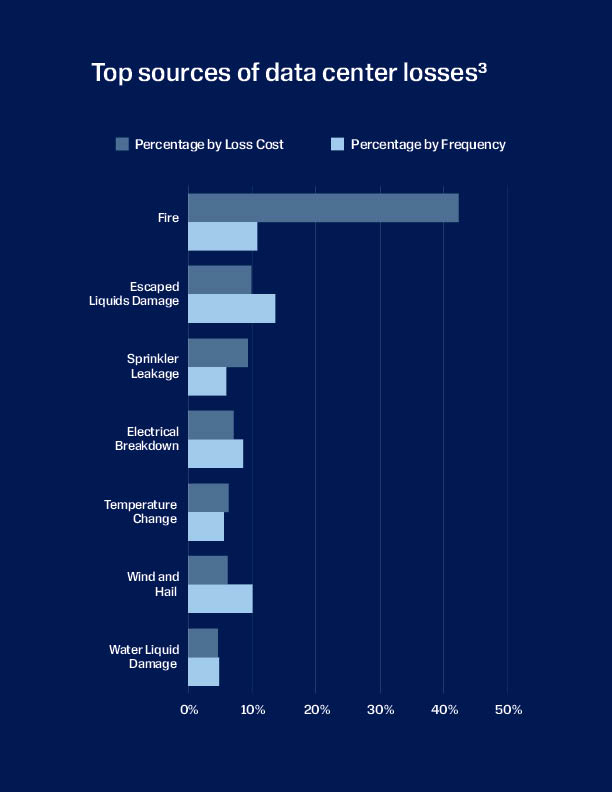
Protecting your data center requires layered defenses that work together to detect, control, and minimize risks before they disrupt operations. Fast-acting systems are essential to protect equipment, safeguard business continuity, and improve insurability.
Here’s what to consider:
- Data Center Infrastructure Management (DCIM) tools are critical to detecting and mitigating upset conditions at the earliest possible signs of failure and reducing loss from external and internal hazards.
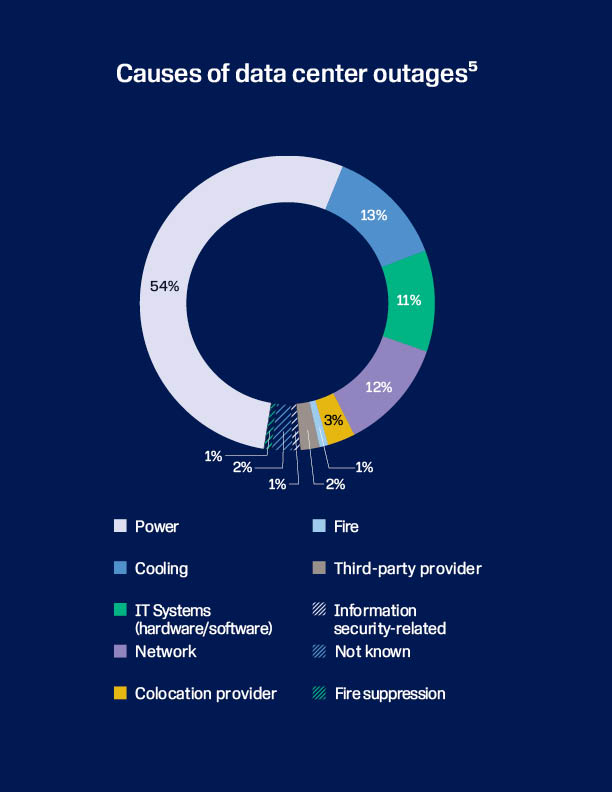
- Power failure is the top cause of data center downtime. Establish back-up power contingencies to mitigate power failure risk.
- Implement appropriate fire suppression systems to protect equipment and operations from ignition sources and hazards throughout the data center.
- Very Early Warning Fire Detection (VEWFD) and gas sensor systems can be used to detect smoldering fires or lithium-ion battery off-gassing, initiating interlocks and emergency response actions to protect high-value equipment. VEWFD interlocks can include limiting cooling air velocities, de-energizing power to equipment, and activation of alarms.
- Utilize reliable and certified equipment. Fire protection systems, including detection systems, should utilize FM Approved products whenever possible.
- The right insurance is the ultimate protection against unexpected losses. From design to occupancy, consider the implications that choices have on insurability, and be sure to secure adequate coverage.
3) Operational readiness
Power, cooling, and critical systems
With redundant power and complex cooling systems to meet both today’s demands and tomorrow’s AI workloads, data centers can maintain continuity under evolving conditions.
Here’s what to consider:
- Apply a resilient design philosophy such as N+1 across all critical systems, including power, cooling, building management, and data transfer infrastructure. This ensures system failure or the need for maintenance do not compromise uptime.
- Choose properly designed cooling systems that meet the needs of data center operation profiles.
- Building Management Systems (BMS) must be integrated with HVAC to help maintain optimal environmental conditions.
- Institute a regular preventative maintenance program for buildings and equipment. Prolonging the life of valuable equipment and preventing unanticipated breakdowns can help avoid both replacement costs and business interruption.
- Power and cooling solutions are evolving to keep up with the demands of AI workloads. Make sure that the introduction of cutting-edge power or cooling solutions has been taken into consideration in the design of detection and protection systems for the site.
4) Skilled teams and structured procedures
The foundation of resilience and business continuity
Design and technology alone can’t guarantee resilience. The human element is equally critical—from skilled operators to disciplined processes to a culture of safety and preparedness.
Here’s what to consider:
- Maintain and practice a Business Continuity Management (BCM) program that outlines contingency protocols for potential disruptions, along with comprehensive emergency response plans. Ensure these address fire, natural hazards, equipment breakdown, utility and/or support system service interruption.
- Implement continuous monitoring of all critical utilities that support the data center, along with regular inspection, testing, and maintenance of site and equipment.
- Establish operator upskilling and training programs to support change management and foster a culture of continuous improvement.
- Define change management protocols to ensure seamless control over tenant installations and modifications, including procedure use and review, vital equipment processes, and potential operational disruptions.
- Set the tone for all property loss prevention and control efforts with good housekeeping and prompt waste disposal.
Protect your data centers with FM
By unifying world class insurance, research, engineering, thought leadership, equipment approvals, and unmatched capacity, FM Intellium helps you anticipate risk, reduce loss, and keep mission critical operations ready to scale. Over the last two decades, FM has supported the interconnected digital and power ecosystems—insuring more than 1,100 data centers representing US$250 billion in insurable value, as well as 20% of U.S. power generation capacity and 7% globally across more than 2,200 facilities. FM delivers integrated risk insight that keeps critical operations resilient.