
Australia winter outlook 2026: A quieter season, familiar risks
The Bureau has issued its winter outlook. For business, the message is straightforward: warmer, drier in many places and little room for complacency.


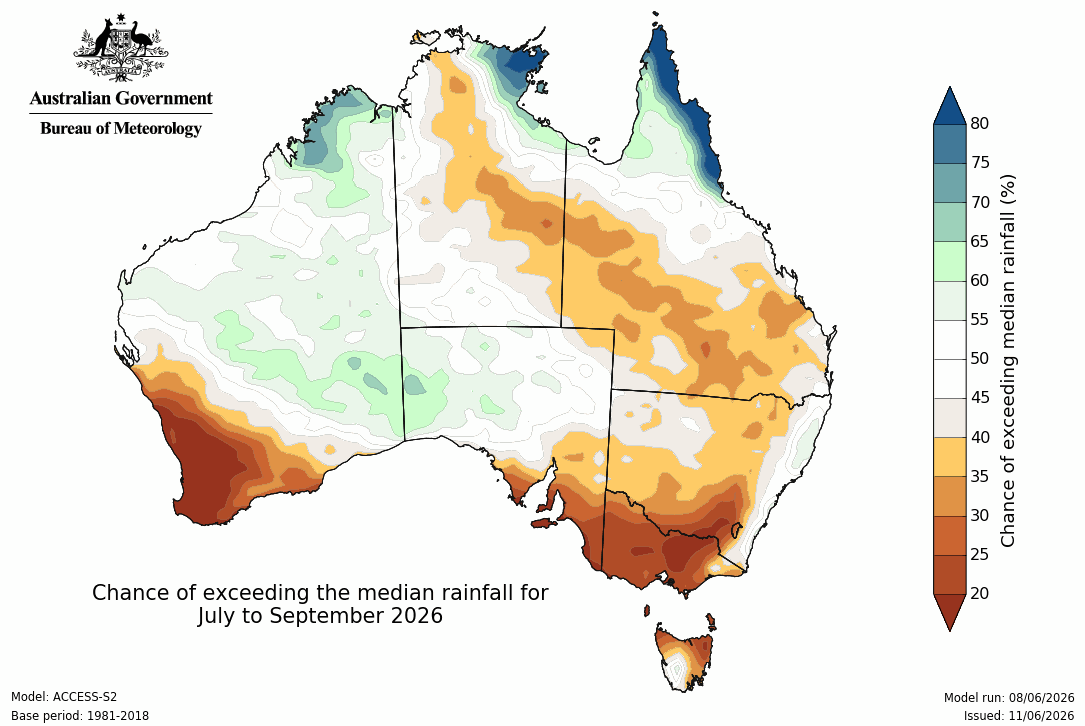
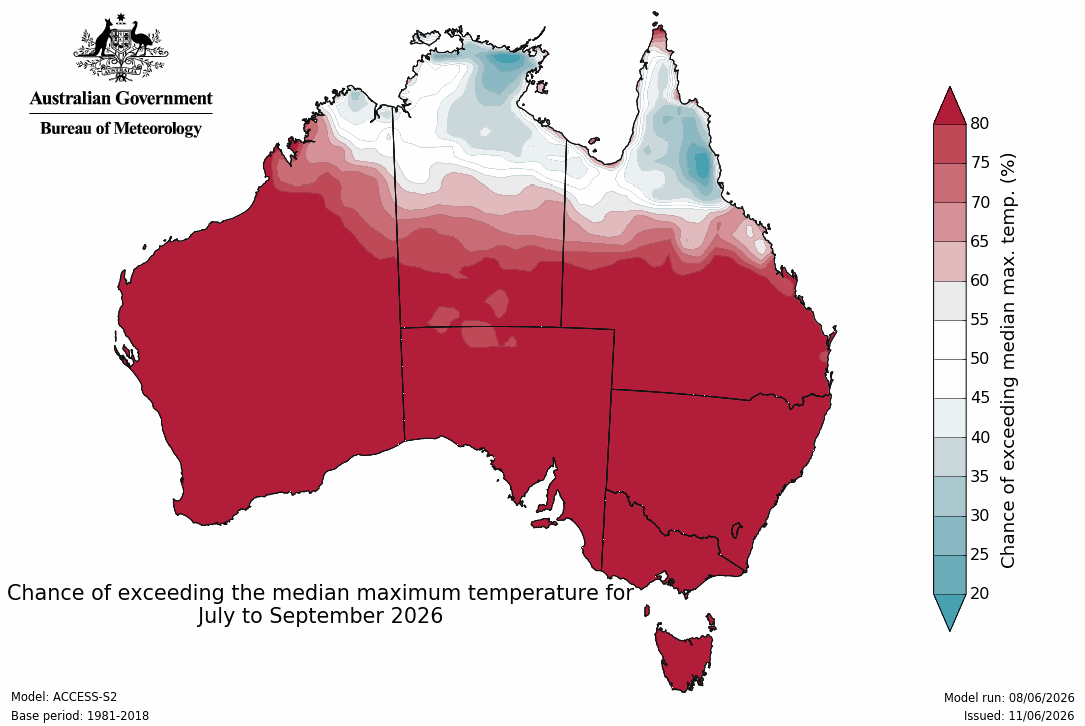
The Bureau of Meteorology’s winter outlook has arrived, as it does each year, with the quiet authority Australians tend to trust on instinct. The message for 2026 is clear enough: below-average rainfall across much of central, southern and eastern Australia and above-average temperatures across most of the country. El Niño is also beginning to stir in the background — not yet dominant, but increasingly plausible as winter unfolds.
None of this sounds especially dramatic on its own. For commercial property owners and operators, however, it is still consequential.
Australia’s risk profile is not spread evenly across the map. It sits where people, assets and infrastructure are concentrated — and where those concentrations keep intensifying. Sydney, Melbourne, Brisbane, Perth and Adelaide now account for the great bulk of the country’s population and economic activity, with the capital cities collectively adding more than 320,000 people in the past year alone. Much of that growth is landing in outer suburban corridors, the same places where logistics hubs, industrial estates and large-format commercial assets continue to cluster.
So when the Bureau says “warmer” and “drier”, businesses should hear a more practical message: the pressure shifts rather than disappears.
The eastern corridor: Drier does not mean safer
Across New South Wales, the ACT and Victoria, the outlook leans towards below-average winter rainfall, paired with very likely above-average temperatures.
For Sydney and Melbourne, that combination can easily invite complacency. A drier winter may sound less disruptive, but the nature of the disruption changes.
In Sydney, the critical exposure lies west and south of the CBD: the warehouses of Eastern Creek and Erskine Park, the manufacturing belts of Wetherill Park and the dense commercial strip running from Alexandria to Botany. In places like these, a missed maintenance cycle matters more than the monthly rainfall total. Roof integrity, stormwater clearance and drainage grading do not become less important simply because totals are down. When a sharp coastal system does arrive — as it inevitably will — it has a habit of finding the weaknesses that have been left to sit quietly all season.
The Illawarra adds another dimension. Wollongong and Port Kembla continue to anchor advanced manufacturing, logistics and emerging clean-energy investment. The issue is less whether winter turns out wet or dry than whether critical infrastructure can handle variability. Seasonal averages are not operational benchmarks.
Melbourne tells a similar story, particularly in the south-east. From Dandenong in the south-east to Laverton North and Truganina in the west, Melbourne’s industrial and logistics corridors underpin a significant share of Victoria’s industrial output. Here, “average” conditions are largely irrelevant to day-to-day risk. A warmer winter can place sustained pressure on building systems, while a drier one can quietly erode assumptions about site drainage and fire load in peripheral areas. The failures that matter most are usually the familiar ones: ageing assets, deferred maintenance and systems never designed for prolonged deviation from historical norms.
Queensland: The supply chain lens
Queensland’s outlook is more mixed, but for business the focus is clear: South East Queensland.
Rainfall is likely to be below average across central and southern Queensland, even as parts of the far north may see above-average rain during what is usually the dry season. In practical terms, that puts Brisbane and its surrounding industrial footprint squarely in view.
Australia’s TradeCoast — spanning the Port of Brisbane, Brisbane Airport and surrounding industrial precincts — is one of the most concentrated clusters of commercial activity in the country. It supports tens of thousands of jobs and handles tens of billions in trade each year.
“The Bureau’s winter outlook should be read as a signal to prepare.”
Here, weather is more than a site-level concern; it is a supply chain variable.
Warmer conditions carry clear energy implications — particularly for cold storage, manufacturing and round-the-clock logistics operations. A drier outlook may reduce the risk of prolonged rainfall, but it does nothing to eliminate exposure to intense, short-duration events. In dense freight environments — Murarrie, Lytton, Pinkenba, Hemmant — disruption rarely stays contained. A blocked drain or localised inundation stops being local very quickly.
Western Australia: concentrated industry, familiar risks
Perth’s growth continues to run ahead of most other capitals, and much of its commercial risk is concentrated in the industrial corridor stretching through Kwinana and the Western Trade Coast.
This area underpins a significant share of Western Australia’s economic output, with heavy industry, processing and logistics operating at scale. The winter outlook — again leaning warmer and drier — brings certain exposures into sharper relief.
In heavy industrial environments, persistent warmth can translate into sustained stress on systems already operating near capacity. Reduced rainfall can lift residual bushfire and grassfire exposure in and around industrial estates, particularly where vegetation management is inconsistent. As elsewhere, the absence of headline weather can invite a quiet drift in maintenance discipline.
Adelaide and beyond: the risk of being overlooked
South Australia rarely dominates the national weather conversation, but its industrial base — particularly around Adelaide’s northern suburbs and port-linked precincts — is increasingly important.
A warmer winter still has implications for energy use, uptime and asset performance. As in every region, the more mundane risks are often the most persistent: corrosion, water ingress, insulation performance and the reliability of systems expected to function without interruption.
Often, the issue is not exposure itself, but the attention paid to it. When a season does not look dramatic, it is easy for it to slip down the priority list.
What this means in practice
The Bureau’s winter outlook should be read as a signal to prepare.
Seasonal forecasts provide a directional view — they do not predict the one storm, cold snap or system failure that ultimately drives loss. For commercial property leaders, the practical response is therefore consistent across geographies:
- Check roofs, drainage and water management systems before they are tested
- Review HVAC and cooling loads in the context of above-average temperatures
- Reassess bushfire, grassfire, fire protection and housekeeping exposures in drier environments
- Confirm business continuity roles, contractors and response protocols
- Test assumptions at site level, not just in policy documents
There is nothing novel in that list. That is exactly why it matters.
Winter 2026 is unlikely to be defined by a single dramatic event. More likely, it will favour the organisations that have kept up with the basics — and expose those that have mistaken a quieter season for a safer one.
Key terms to know
Below-average rainfall
Rainfall totals that are lower than the historical median for the season in a given area. It does not mean no rain, and it certainly does not rule out heavy individual weather events.
Above-average temperatures
A higher likelihood that daytime and/or overnight temperatures will exceed the historical median for the season. In commercial settings, that can mean more strain on cooling, refrigeration and around-the-clock operations.
ENSO neutral
A period in which the El Niño–Southern Oscillation is not currently in either El Niño or La Niña phase. Neutral does not mean no risk; it means broader climate drivers are not yet firmly in one camp.
El Nino
A climate pattern that often influences rainfall across northern, central and eastern Australia from winter into early summer, with impacts typically peaking in spring. No two El Niño events behave exactly the same way.