When Science Meets Resilience


When Science Meets Resilience: How FM and NUS Joined Forces to Rethink Flood Risk in Southeast Asia
For most business leaders, flood risk still shows up in relatively familiar ways: a coloured map, a clause in an insurance policy or, too often, the cleanup after a storm. The harder question now sits just out of sight. How do you plan for risk when the risk itself is changing?
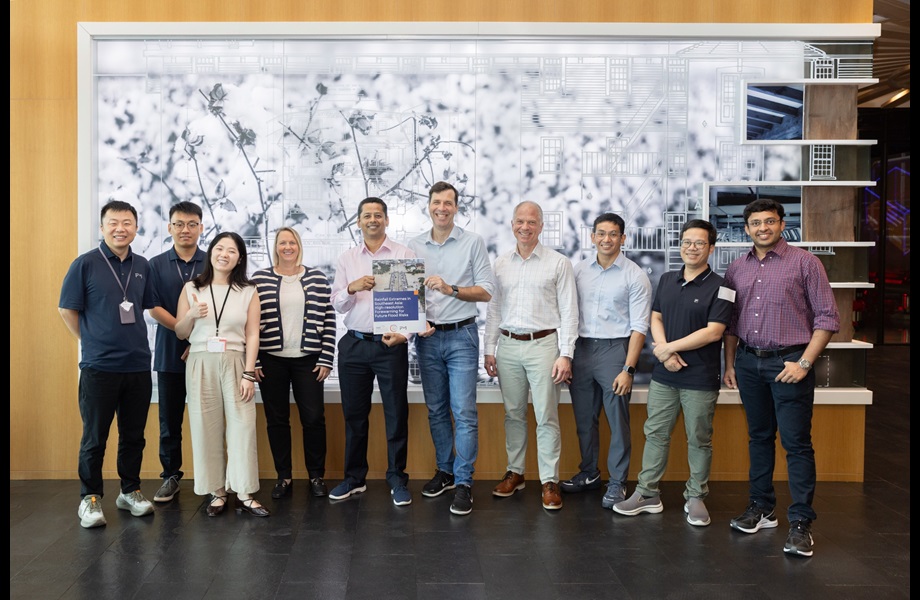
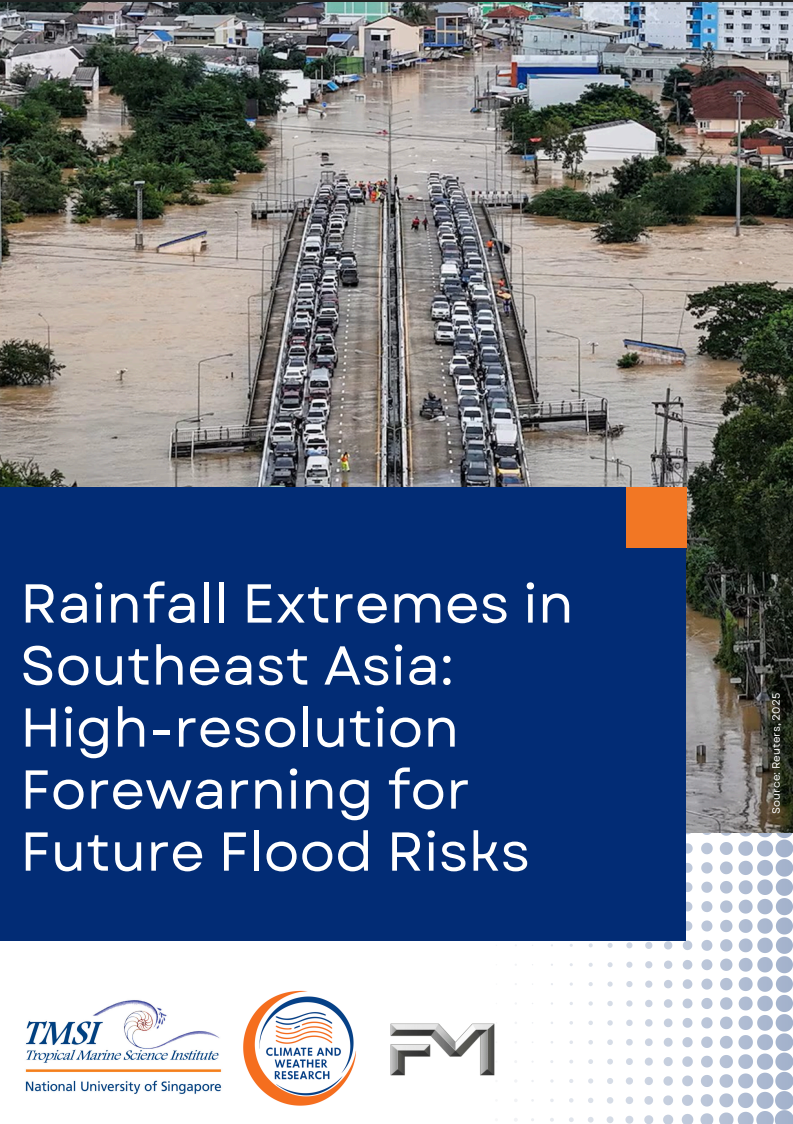
A collaboration between commercial property insurer FM and the Tropical Marine Science Institute (TMSI) at the National University of Singapore (NUS) explores that question through a new report: Rainfall Extremes in Southeast Asia: High-resolution Forewarning for Future Flood Risks. From there, the partnership is best understood as an FM–TMSI collaboration, with TMSI bringing the climate science capability of a specialist research institute within NUS and FM bringing applied risk engineering expertise. Together, the work brings climate science into the same room as practical risk engineering, giving organisations a better sense of how extreme rainfall may develop across one of the world's most economically important regions.
The report’s central finding is clear: across Southeast Asia, extreme rainfall is expected to become more intense, particularly the short-duration storms that can overwhelm drainage systems, low-lying sites and critical infrastructure. For businesses, that shifts flood risk from a historical planning exercise to a forward-looking resilience question.
For CEOs, CFOs and risk managers, it provides actionable guidance from two very different institutions working from the same instinct: use evidence, expertise and long-term thinking to help people prepare before events occur.
A meeting of complementary strengths
NUS traces its roots to 1905, when it was established to educate future generations of leaders and professionals in a region moving quickly into the modern age. Today, it is one of Asia's leading research universities, with strengths across engineering, science, medicine and technology.
FM's story began nearly two centuries ago with a deceptively simple belief: The majority of property loss can be prevented. The mutual insurer built its reputation not by waiting to pay claims, but by studying risk at its source and helping clients avoid losses before they happen. Science, engineering and research have always been central to that work.
On paper, an academic research institute and a property insurer might look like an odd pairing. In practice, it makes sense. Both are drawn to evidence over assumption, and both know that better decisions usually begin with better questions.
"TMSI is a leading institution in extreme weather and climate modelling in the Asia Pacific region," said Dr. Angelika Werner, research director, natural hazards and climate at FM. "Our partnership provides FM with distinctive and valuable insights into the evolving regional risk landscape across Southeast Asia."
This is where the partnership starts to click.
TMSI brings deep capability in climate modelling and atmospheric science. FM brings decades of experience turning scientific insight into practical guidance for businesses, insurers, engineers and property owners. Together, they have taken on a difficult gap: how to make advanced climate projections useful to the people making decisions about buildings, assets and business continuity.
“The FM–TMSI partnership shows what can happen when scientific excellence and practical risk expertise are brought to bear on the same problem.”
Looking beyond the rear-view mirror
A lot of climate resilience work still starts with the past.
For decades, engineers and risk managers have used historical rainfall records to estimate flood risk and design infrastructure. That has been a sensible way to work, until the climate starts to move beyond the records. Conditions with no obvious precedent are becoming part of the planning landscape, which means the rear-view mirror is no longer enough.
"As the climate warms, historical rainfall records alone are no longer sufficient to understand future flood risk across Southeast Asia. This collaboration with FM combines advanced regional climate modelling with applied risk analysis to provide more forward-looking insights into how extreme rainfall events may intensify," said Dr. Sri Raghavan, principal research fellow, head of the Climate and Weather Research Cluster, as well as deputy director of TMSI at NUS.
That gave FM and TMSI a shared reason to look ahead.
The report uses regional climate modelling to examine how extreme rainfall may change across Southeast Asia under future climate conditions. Instead of relying only on observed weather history, the researchers simulated future rainfall patterns at very high resolution, producing projections that can support flood risk assessments, engineering decisions and resilience planning.
The findings are not especially comforting.
Extreme rainfall events are projected to intensify across Southeast Asia, particularly the short, sharp storms that can turn streets, drains and low-lying sites into flash-flood channels. Events once treated as rare are expected to become more severe, while the region's broader flood hazard baseline continues to creep upward.
The report projects that the average intensity of rare 100-year rainfall events across Southeast Asia could increase by about 28% for 5-minute rainfall, 25% for 60-minute rainfall and 24% for 24-hour rainfall under a high-emissions future climate scenario.
For organisations with critical facilities, supply chains or infrastructure across the region, this is no longer a distant climate concern. It is becoming part of the way they need to think about resilience, investment and continuity.
Translating science into decisions
The project's value sits in science, and in the way that science can be used.
From the start, the collaboration was designed to produce research that could move beyond the laboratory. The study created some of the first high-resolution future rainfall extreme and intensity-duration-frequency (IDF) datasets for Southeast Asia, offering a more detailed view than many existing approaches allow.
The study used 10-km regional climate simulations with rainfall recorded at 5-minute intervals, allowing researchers to analyse rainfall durations from 5 minutes to 24 hours and return periods from 5 to 100 years.
Those datasets can help businesses assess how facilities, infrastructure and urban systems may perform under future climate conditions. They can also support catastrophe modelling, long-term resilience planning and flood risk management.
As Dr Julien Oliver, FM Asia Pacific research group manager, natural hazards and climate, explained: "By translating advanced climate science into actionable risk engineering indicators, this research turns evolving hazard patterns into practical insights across Southeast Asia."
It is a practical point, and it says something about the way both organisations think.
Universities are often judged by the discoveries they make. Organisations like FM are judged by the losses they help clients avoid and the resilience they help build. This partnership is finding ways to do both.
Bridging science and action
The report returns often to the need to bridge science and action. The phrase can sound almost too neat, but here it feels earned.
It also happens to describe the partnership rather well.
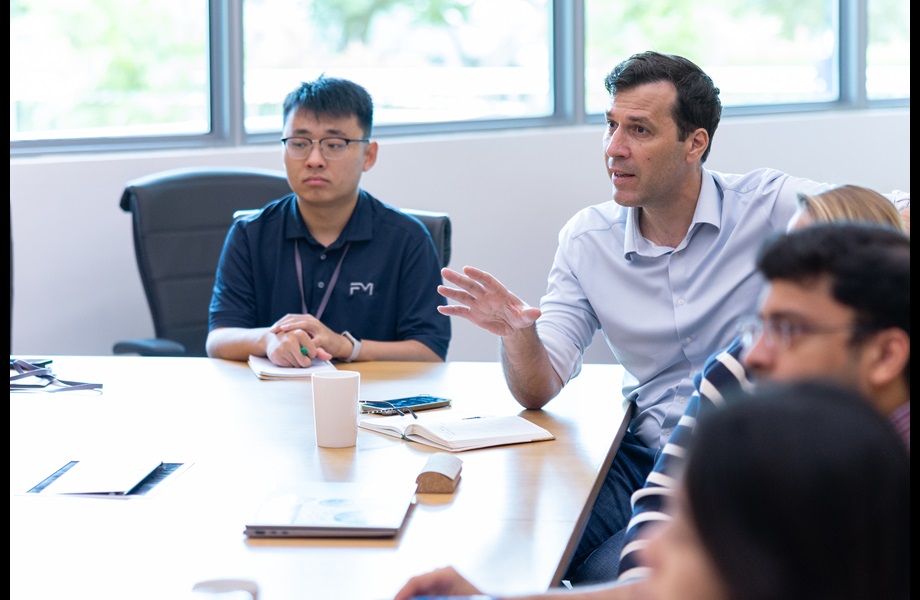
Researchers at TMSI led the scientific work, applying advanced climate models and rigorous methods to understand future rainfall extremes. FM's natural hazards and climate team worked alongside them, helping ensure the outputs would be relevant to businesses, insurers and decision-makers. The framework was also tested beyond Southeast Asia, including applications in California, which points to its broader robustness and transferability.
For Southeast Asia — one of the world's fastest-growing regions and among the most exposed to rainfall-related hazards — the timing matters. Dense urbanisation, expanding economies and complex weather systems are making future flood risk harder to read and more important to get right.
The FM–TMSI collaboration shows what can happen when scientific excellence and practical risk expertise are brought to bear on the same problem.
In the end, the report works as a useful piece of research and as a reminder of what good risk work is meant to do: help organisations read the risks ahead with more confidence, then start preparing before the water arrives.
Download the full report, here: Rainfall Extremes in Southeast Asia: High-resolution Forewarning for Future Flood Risks